
Filter Formats:


Description
PAYU Price Code link: Price Code M
BBC School Radio broadcast - 3 episodes
Episode length - 20 mins
Movement and dance series for children aged 4 to 6. This is a three-part unit about the rainforest and the creatures that live in it. It explores how the animals move and find food.
1 - Sloth and Leopard
2 - Flying Dragon Searches for Ants
3 - Leopard is Rescued
Notes taken from BBC School Radio website. Full teacher notes are included with this resource.
Click on the topics below and then click ‘search’ to find other related resources.
Description
PAYU Price Code link: Price Code M
BBC School Radio Broadcast - 4 episodes
Episode length - 20 mins
Movement and dance series for children aged 4 to 6.
Folk Dance Around the World
Children will have the chance to learn four new dances from different regions: Senegal and The Gambia, in West Africa; Greece; Ireland; and Northern India.
1 - African Dance - a celebration dance from the Wollof tribe of Senegal and The Gambia
2 - Greek Dance - Khastorias: a circle dance
3 - Irish Dance - a selection of Irish dances
4 - Indian Dance - traditional movements from Northern India
British Folk Dance
This programme provides an enjoyable and manageable introduction to some of the features of traditional British folk dance.
1 - Busy Feet
2 - Meeting and Greeting
3 - Patterns Galore
4 - Circle Dance
Notes taken from BBC School Radio website. Full teacher notes are included with this resource.
Click on the topics below and then click ‘search’ to find other related resources.
Richard Hammond's Journey to the Centre of the Planet (2 ep) BBC1 (DVD)
Code: TD3433
Type: Audio Visual
Key Stages: 2 - 4

Description
PAYU Price Code link: Price Code M
Episode Length 60 min
Richard Hammond presents a geological journey to the bottom of the ocean and the centre of the Earth, revealing how the inner workings of the planet affect life on the surface.
Episode 1: How Does the Earth Work?
Using a giant 3D virtual Earth, Richard peels back the layers and show where volcanoes come from, why earthquakes happen and even where to find diamonds. Using stunning CGI, the latest satellite imagery and beautiful locations around the world, the story of how the Earth works has never been seen like this before.
Episode 2: What Lies at the Bottom of the Oceans?
What would happen if the planet lost its oceans? Richard is going to drain the oceans to find out. Hidden beneath all that water are some of the biggest natural formations on earth: The longest mountain ranges, the tallest volcanoes and the deepest canyons. Richard can reveal all this and more in a way never seen before, because he has the ultimate toy - a vast working 3D virtual Earth in a hangar.
We make every effort to ensure resources are appropriate for school use, however please watch prior to use to ensure suitability for your class.
Click on the topics below and then click ‘search’ to find other related resources.
Shock and Awe: The Story of Electricity (3 ep) BBC4 (DVD)
Code: TD3547
Type: Audio Visual
Key Stages: 2 - 4
Description
PAYU Price Code link: Price Code M
Episode Length 60 min
Professor Jim Al-Khalili tells the story of our quest to master nature's most mysterious force - electricity. Until fairly recently it was seen as a magical power, but it is now the lifeblood of the modern world and underpins every aspect of our technological advancements. This series tells of dazzling leaps of imagination and extraordinary experiments - a story of maverick geniuses who used electricity to light up cities, to communicate across the seas and through the air, to create modern industry and to give us the digital revolution.
Episode 1: Spark
This episode tells the story of the very first 'natural philosophers' who started to unlock the mysteries of electricity. They studied its curious link to life, built strange and powerful instruments to create it and even tamed lightning. It shows what happened when the first real effort was made to understand electricity; how we learned to create and store it, before finally creating something that enabled us to make it at will - the battery.
Episode 2: The Age Of Invention
Just under 200 years ago scientists discovered something profound - that electricity is connected to another of nature's most fundamental forces, magnetism. In this episode, Jim discovers how harnessing the link between magnetism and electricity would completely transform the world, allowing us to generate a seemingly limitless amount of electric power which we could utilise to drive machines, communicate across continents and light our homes. This is the story of how scientists and engineers unlocked the nature of electricity in an extraordinary century of innovation and invention.
Episode 3:Revelations And Revolutions
Electricity is not just something that creates heat and light, it connects the world through networks and broadcasting. After centuries of man's experiments with electricity, this episode tells the story of how a new age of real understanding dawned - how we discovered electric fields and electromagnetic waves. Today we can hardly imagine life without electricity - it defines our era. As our understanding of it has increased so has our reliance upon it, and today we're on the brink of a new breakthrough, because we can understand the secret of electrical superconductivity we could again transform the world.
We make every effort to ensure resources are appropriate for school use, however please watch prior to use to ensure suitability for your class.
Click on the topics below and then click ‘search’ to find other related resources.
Description
This resource is available for loan to LRH member schools only. Please contact us at wslr@wiltshire.gov.uk to discuss membership options.
PAYU Price Code link: Price Code M
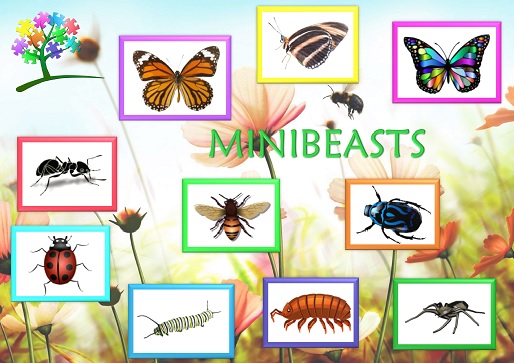
Bring your Minibeasts topic to life with augmented reality using our interactive Minibeasts e-Pack. Download the FREE Zappar app onto your device to use this resource. "Zap" the images on the resource with your device and watch them come to life as short video clips and websites about minibeasts.
This pack contains a large (A1) e-Poster, a set of A4 e-Mats and an e-Slide (for your interactive whiteboard).
The different formats included in each pack make this a really versatile resource for whole class, group and independent learning.
Click on the topics below and then click ‘search’ to find other related resources.
Description
PAYU Price Code link: Price Code M
Episode Length 60 min
David Attenborough travels to the ends of the earth on an extraordinary journey across the polar regions of our planet. The Arctic and Antarctic are the greatest and least known wildernesses of all - magical ice worlds inhabited by the most bizarre and hardy creatures on earth.
Episode 1: To the Ends of the Earth
Episode 2: Spring
Episode 3: Summer
Episode 4: Autumn
Episode 5: Winter
Episode 6: The Last Frontier
Episode 7: On Thin Ice
Episode 8: The epic Journey
See also: BD0020 Polar Regions
| https://wslr.co.uk/catalog/view/4888 |
Click on the topics below and then click ‘search’ to find other related resources.
Nina and the Neurons: Brilliant Bodies (25 eps) CBeebies (DVD)
Code: TD3843
Type: Audio Visual
Key Stage: 1

Description
PAYU Price Code link: Price Code M
Episode Length 15 min
25 episodes
Scientist Nina and her young experimenters investigate our bodies and find out why they are brilliant.
See also: BD0023 Senses
| https://wslr.co.uk/catalog/view/4933 |
Episode 1: Heart
Nina investigates why our heart beats with the help of her five sense neurons. They use their senses to see what a heart looks like and they feel and hear their own hearts beating inside their chests. Next, they go to a fun park and have fun on a white water ride. They discover amazing facts about our hearts and why they beat.
Episode 2: Handy Hands
Nina investigates how our hands work, with the help of Felix, her touch neuron. Experimenters Esther, Lily and Ruby visit Nina in her lab and discover that we can move and bend our hands in lots of useful and different ways. They learn how people can do lots of things that animals can't, like eating with a knife and fork, because we have really special thumbs.
Episode 3: Sneeze
Nina investigates why some things make us sneeze, with the help of Ollie, her smell neuron. Experimenters Mika, Molly and Ryan visit Nina in her lab and find out that we sometimes sneeze when something irritates or tickles our nose. They discover how fast a sneeze can travel, and why it's important to cover our noses when we sneeze.
Episode 4: Two Ears
Nina investigates why we have two ears with the help of Belle, her hearing neuron. Experimenters Eve, Finlay and Lana visit Nina in her lab. They do a listening experiment and discover that in a noisy place, when there are lots of different sounds happening at once, it is easier to make out what someone is saying when you use both ears.
Episode 5: Blood
Nina investigates why we have blood in our bodies, with the help of Luke, her sight neuron. Experimenters Gary, George and Ryan visit Nina in her lab and discover that there is lots of blood inside us. The blood travels to every part of our bodies, from the tops of our heads to the tips of our toes, inside lots of tiny little tubes.
Episode 6: Brain
Nina investigates why we have a brain with the help of her five sense neurons. Experimenters Chevaz, Kian and Shay visit the lab and discover how our amazing brain is the control centre for our body. They learn how the brain sends invisible messages to our body to make it move using an experiment with remote control cars.
Episode 7: Wrinkly Faces
Experimenters Chloe and Jodi bring their grandpa to Nina's lab and discover that his face wasn't always wrinkly - and that our skin is elastic. They go to a beauty salon and see how the hard masks stop them from pulling faces at Grandpa Jim. Then they go back to the lab and Nina explains how our body makes less collagen as we get older, a substance which helps our skin stay smooth.
Episode 8: Earwax
Experimenters Evie, Joshua and Xanthe visit Nina in her lab. They do experiments and discover that wax is sticky, waterproof and does a brilliant job of protecting the inside of our ears. It keeps the skin soft and healthy and stops dirt and dust from getting inside. Belle reminds us that we must never stick anything inside our ears.
Episode 9: Exercise
Nina investigates why exercise is good for us with the help of her sense neurons. Experimenters Catriona and Luke visit the lab and discover that anything that makes us move our body can be exercise. They find out how wheelchair basketball makes your arms really strong, and Nina explains how exercise can be good for our minds as well as our bodies.
Episode 10: Digestion
Nina investigates where food goes when we eat it, with the help of Bud, her taste neuron. Experimenters Arianna and Maria visit Nina in her lab and find out all about our food's amazing journey through our digestive system. They visit a giant slide and push some mashed up food through a model of the intestine.
Episode 11: Sleep
Nina investigates why we have to sleep, with the help of her five sense neurons. Experimenters Kirsty, Olim and Tegan visit Nina in her lab. They find out that babies and children need more sleep than grown-ups because sleep is really important in helping our bodies to grow. Next, they visit a post office and ply with some toys that need batteries.
Episode 12: Eyelashes
Nina investigates why we have eyelashes, with the help of Luke, her sight neuron. Experimenters Macy, Nicholas and Rebecca visit Nina in her lab. They go to see the camels in a wildlife park and do an experiment with Venus flytraps.
Episode 13: Bellybuttons
Nina investigates what bellybuttons are for, with the help of Luke, her sight neuron. Experimenters Izzy, Khalil and Leni-Rae visit Nina in her lab and discover that everyone has a bellybutton in the middle of their tummy… and so do lots of animals. They do an experiment to show how a baby gets all of the food, water and air it needs through an umbilical cord.
Episode 14: Scabs
Nina investigates what scabs are for, with the help of Luke, her sight neuron. Experimenters Megan, Oscar and Ross visit Nina in her lab and discover that scabs form over cuts in our skin to stop the blood from leaking out. They learn that scabs also do the important job of keeping nasty germs out of a cut.
Episode 15: Eyes See
Nina investigates how our eyes help us see, with the help of Luke, her sight neuron. Experimenters Megan, Thomas and Zara visit Nina in her lab and discover that our round eyeballs are brilliant at rolling around. This means that we can look in lots of different directions. They visit a theatre and find out that our eyes need light to see, and back at the lab they play a game of catch.
Episode 16: Burp
Nina investigates why fizzy drinks make us burp. Experimenters Brodie, Callum and Maykl visit Nina in her lab and discover that the bubbles in fizzy drinks are made of a type of gas. Nina explains that when we drink fizzy drinks, or if we just eat or drink too quickly, gas can build up in our tummies. Next they visit a lighthouse and back in the lab, they do a noisy experiment with balloons.
Episode 17: Spine
Nina investigates why our backs are so bumpy, with the help of Felix, her touch neuron. Experimenters Cara, Kai and Rianna visit Nina in her lab and find out that our backs feel bumpy because it's made up of lots of little hard bones. These protect something called the spinal cord. They go to an exercise class and then back in the lab, they do a smashing experiment with eggs.
Episode 18: Breathe
Nina investigates how we breathe, with the help of sense neurons Bud and Ollie. Experimenters Freya, Laura and Wannie visit Nina in her lab and discover that we have two lungs inside our chests that fill up with air when we breathe in. Using a model of our chest, they find out how a stretchy muscle called our diaphragm pulls the air down into our lungs and then pushes it back out again.
Episode 19: Skin
Nina investigates why we have skin, with the help of Felix, her touch neuron. Experimenters Ciaran, Harry and Jordan visit Nina in her lab and find out that our skin is like a rucksack for our body, keeping our insides safe and in place. Then they visit a car wash and discover that our skin is also good at keeping things out of our bodies, such as dirt and germs.
Episode 20: Balance
Nina investigates how we stay balanced, with the help of her sense neurons Belle, Felix and Luke. Experimenters Hannah and Megan visit Nina in her lab and discover that our ears have a special liquid inside them, which helps us to balance. Next they go to a circus school. There they learn to walk a tightrope - and feel how muscles all over our brilliant bodies help us to balance.
Episode 21: Memory
Nina investigates how she remembers so many things, with the help of her five sense neurons. Experimenters Lewis, Mason and Sam visit Nina in her lab and find out that our senses are really important in remembering things. They discover that smelling, tasting, seeing, hearing and touching something take spark a memory.
Episode 22: Broken Bones
Nina investigates how broken bones get better, with the help of Felix, her touch neuron. Experimenters Cei and Jack discover that bones are really hard and strong because of something called calcium, which we get from lots of yummy foods. But bones can sometimes break if we have an accident. Nina takes them to a hospital where a doctor shows them some X-rays of broken bones.
Episode 23: Fingertips Feel
Nina investigates how our fingertips feel things, with the help of Felix, her touch neuron. Experimenters Emilija, Mya and Toni visit Nina in her lab. They discover that they can use their fingertips to work out if objects are wet or dry and hot or cold. Nina explains that if our fingertips feel that something is too hot or prickly, a message is sent to our brains to pull our hand away.
Episode 24: Tickly Feet
Nina investigates why our feet are so ticklish, with the help of Felix, her touch neuron. Experimenters Breagh and Zoe visit Nina in her lab and find out that tickles are caused when something touches our ski very, very slightly. Then they do an experiment to test which parts of the body are the most ticklish.
Episode 25: Yawn
Nina investigates why yawning makes other people yawn, with the help of Belle, her hearing neuron. Experimenters Kyle, Jack and Christopher visit Nina and she explains that yawning is a reflex action - something the body does all by itself, whether we want it to or not! They all visit a zoo and experiment to see if they can talk without words and still understand each other.
Click on the topics below and then click ‘search’ to find other related resources.
Anne Frank & Holocaust Newsround Specials (2 eps) CBBC (DVD)
Code: TD4819
Type: Audio Visual
Key Stages: 2 - 3

Description
Episode length - 30 mins
Anne Frank: A Life in Hiding
This Newsround special explores the story of Anne Frank - a young, Jewish teenager forced to go into hiding with her family during the Holocaust.
Finding My Family: Holocaust
In this Newsround special, Holocaust survivor Steven Frank takes his teenage granddaughter Maggie on a journey to learn about his experiences during the Holocaust.
First the visit Amsterdam to learn about his happy family life there before the war, and what happened to Dutch Jews during Nazi occupation.
Next they travel to Terezin in the Czech Republic, where Steven was held, to learn about the horrors of life inside concentration camps.
Finally the pair travel to Auschwitz to learn about what happened to members of Steven's family who didn't survive the Holocaust.

Description
PAYU Price Code link: Price Code M
Episode Length 35 min
A special programme from the Titanic exhibition to mark 100 years since the sinking of the famous ship. A well as the inside story of the Titanic, Barney visits a luxury boat show in Miami and Helen takes part in a daring Sea King air sea rescue.
See also: BD0006 Changes within Living Memory
| https://wslr.co.uk/catalog/view/6 |
Click on the topics below and then click ‘search’ to find other related resources.
Dates and Deadlines
Upcoming
We will always endeavour to include requests received after this date on our delivery routes, time and weight permitting, but please be aware this may not be possible. If we are unable to deliver, and the resources are available, you would be welcome to call and collect them from us instead.
20 December 2026: |
Deadline date for Spring Terms 2026 delivery |
Feature
Resource:
Brightstorm by Vashti Hardy - SINGLE COPY
 View Resource
Toniebox audio player and Tonies
The Miraculous Journey of Edward Tulane by Kate Camillo - SINGLE COPY
Call of the Titanic by Lindsay Galvin (6 Copies)
Loki: A Bad God's Guide to Being Good by Louie Stowell - SINGLE COPY
News:

Copyright © Learning Resources Hub


